
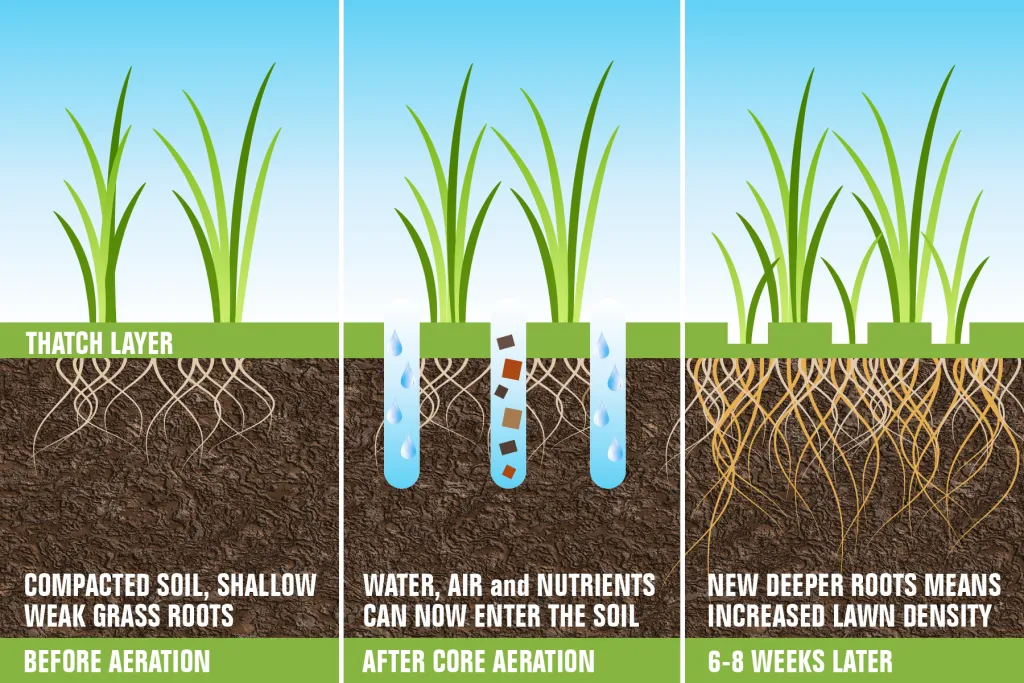
Homeowners usually start comparing lawn aeration by asking about price or the best month to schedule it. Those questions matter, but they are only useful when paired with the condition of the lawn. Core aeration opens compacted surface soil by removing small plugs. Overseeding adds grass seed across existing turf. Together, aeration and seeding may make sense for a lawn that is thin or worn but still has enough viable turf to improve.
Cape St. Claire lawns can include sunny front yards, shaded areas under mature trees, narrow gates, slopes, low sections that stay soft after rain, and heavily used paths. Those differences affect whether aeration and overseeding fit the problem and how the work should be planned. For service details, visit Schofield Outdoors' lawn aeration and overseeding page, then confirm coverage on the Cape St. Claire service area page.
How does fall timing affect an aeration estimate?
For Maryland cool-season lawns, late summer into early fall is generally the useful renovation window. University of Maryland Extension identifies mid-August through mid-October as the preferred period for renovation and overseeding. As summer heat eases, new grass has time to begin establishing before winter.
The date alone does not make a lawn ready. Soil moisture, current heat, turf stress, recent lawn treatments, and the homeowner's ability to care for new seed all matter. Saturated soil or a lawn under severe drought stress may call for a different day or a different plan. Estimates are open now so those conditions can be discussed before the fall window is underway; that is not a promise that every property needs the same service or timing.
Which property details shape scope and cost?
There is no responsible one-price answer without looking at the scope. Lawn size is only one factor. Access through gates or narrow side yards, slopes, separate turf areas, current lawn condition, hidden obstacles, and whether the request is for core aeration, overseeding, or both can all affect an estimate.
When comparing quotes, ask what the price actually includes. Confirm the lawn areas being treated, whether seed is part of the scope, what preparation is expected from you, and what aftercare guidance will be provided. A lower number for aeration alone is not directly comparable with a proposal that also includes lawn overseeding. Schofield Outdoors provides property-specific estimates rather than publishing a price for an unseen lawn.
When does aeration and overseeding fit the lawn?
It can be a sensible investment when compacted surface soil and thin existing turf are the problems you are trying to address. Regular foot traffic, play areas, and worn paths can leave ground firm underfoot. Core aeration creates openings in that surface, while overseeding introduces new grass seed where established turf has thinned.
It is not a cure for every bare or wet area. Standing water, active erosion, extensive bare soil, deep shade, heavy weed pressure, or a drainage problem may require another correction before seeding has a reasonable opportunity to establish. Walk the lawn area by area before requesting an estimate. Note where grass is thin, where soil stays wet, and where shade or traffic changes. That gives the estimator a clearer picture than describing the entire property as simply “patchy.”
What preparation belongs in the estimate conversation?
One common mistake is treating the calendar as the only condition that matters. Aerating saturated ground or severely stressed turf can create new problems instead of setting up a better seedbed. Another is assuming that more seed will correct drainage, shade, or erosion. Those conditions need to be identified rather than hidden under a seeding request.
Preparation mistakes also matter. Sprinkler heads, invisible pet fencing, valve boxes, drain covers, shallow drainage components, and low landscape lighting may be difficult to see from equipment. Mark them and point them out before work begins. Move hoses, toys, furniture, and loose items off the turf, and describe gates, slopes, fenced areas, and narrow access when requesting the estimate.
Finally, do not book overseeding without planning for establishment. New seed needs consistent moisture without runoff or waterlogged soil, and young areas should be protected from avoidable foot traffic. Ask when regular mowing can resume and how pets, children, or routine yard use should be managed. Follow the guidance provided for the seed, site, and current weather rather than relying on a fixed schedule from a different lawn.
What should be settled before booking?
A useful conversation should settle whether the lawn calls for core aeration, overseeding, or both; which turf areas are included; what needs to be marked or moved; and what care will be expected afterward. Mention recent pre-emergent or other lawn treatments because some products may affect seed germination. Also explain whether you can water the seeded areas and whether pets or regular foot traffic will be difficult to limit.
Share your Cape St. Claire address, the lawn areas you want reviewed, where the ground feels firm or stays wet, and any access restrictions. Schofield Outdoors serves Cape St. Claire as part of its established Anne Arundel County service area. To discuss a property-specific scope, request an aeration and seeding estimate or call (410) 656-3182.