
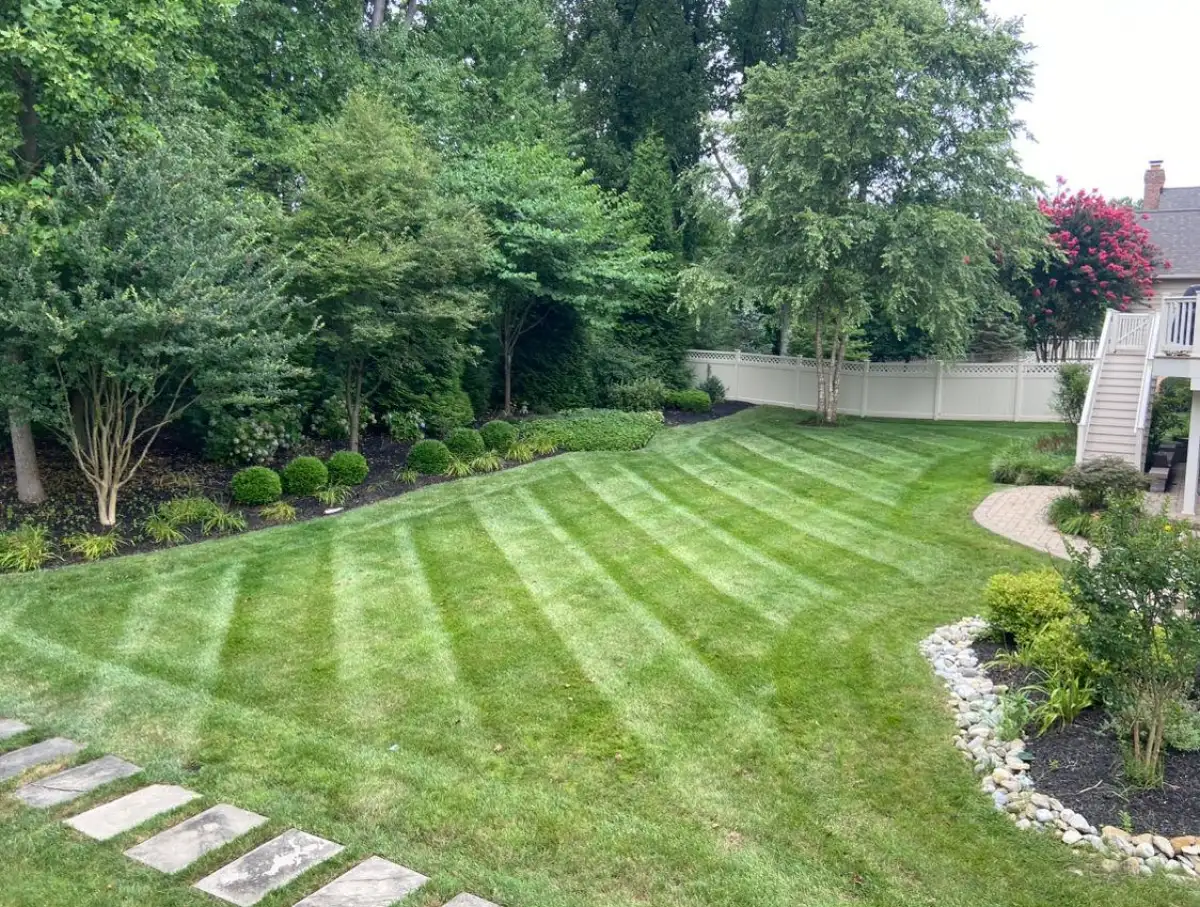
Most questions about lawn aeration come down to three decisions: whether compaction is part of the problem, whether the existing turf would benefit from overseeding, and whether the household can support the aftercare that new seed needs. Those answers matter more than choosing a service from a seasonal checklist.
Cape St. Claire properties often combine open lawn, mature-tree shade, sloped sections, worn play areas, low spots, and narrow access between the street and backyard. A useful estimate should account for those differences. Schofield Outdoors provides core aeration and lawn overseeding throughout its established Cape St. Claire service area.
What is the difference between aeration and overseeding?
Core aeration removes small plugs from the lawn to create openings in compacted surface soil. Overseeding distributes grass seed through an existing lawn to add new growth in thin turf. The two services are often paired because aeration can improve seed-to-soil contact, but they do not solve the same problem.
A lawn may need aeration without seeding, seeding as part of a broader repair plan, or neither. Ask which condition each part of the proposed scope is meant to address. That is more useful than assuming “aeration and seeding” must always be one fixed package.
When should a Maryland lawn be aerated and overseeded?
University of Maryland Extension generally recommends late summer through early fall for lawn renovation and overseeding, with mid-August through mid-October as the usual window. This timing gives cool-season grass a chance to begin establishing as peak summer heat eases.
The calendar does not override the property. Soil that is saturated after heavy rain, turf under severe heat stress, recent lawn treatments, or a household that cannot water new seed may change the practical plan. Schofield Outdoors is accepting fall estimates now so Cape St. Claire homeowners can discuss the lawn condition and timing before work is scheduled.
How can I tell whether aeration fits my lawn?
Core aeration may be worth discussing when the soil surface feels firm, heavily traveled routes are worn, or turf is thinning where compaction may limit root growth. Walk the lawn and compare different zones. A sunny front yard, a shaded backyard, and the ground beside a driveway may each behave differently.
Also note problems that aeration and seed will not correct on their own. Persistent standing water, active erosion, broad bare areas, dense shade, and heavy weed pressure may call for another or an additional solution. An estimate should distinguish between turf that is thin and turf growing in conditions that still need to be corrected.
What affects an aeration and seeding estimate?
Lawn size is only one part of the scope. Separate front and backyard sections, gates, slopes, tight side yards, obstacles, and soft ground can affect how equipment reaches and moves across the property. The estimate should also state whether it includes core aeration, overseeding, or both, and which lawn areas are included.
That detail makes price comparisons more meaningful. An aeration-only proposal cannot be compared directly with a proposal that also includes lawn seeding. Rather than relying on a general hourly rate or a neighborhood price, compare the work, areas, preparation, and aftercare guidance included for your lawn.
What should be marked or moved before aeration?
Aeration equipment travels over the turf, so identify items that may be difficult to see from the surface. These can include sprinkler heads, invisible pet fencing, valve boxes, drain covers, shallow drainage components, and low landscape lighting. Tell the provider about other known obstacles before work begins.
Move hoses, toys, furniture, and loose objects off the lawn, and confirm that gates open wide enough for access. Mention recent pre-emergent or other lawn treatments because some products can interfere with seed germination. If different areas should be excluded, point them out before the scope is finalized.
What aftercare should I plan before booking overseeding?
New seed needs consistent moisture without runoff or waterlogged soil. The right approach changes with weather, sun exposure, soil condition, and the seed used, so ask for property-specific watering guidance. A shaded section may stay damp longer than an open, sunny section of the same yard.
Plan to limit avoidable foot traffic while young grass begins establishing, and ask when mowing should resume. Pets, children, and everyday walking routes may need temporary adjustments. Once the new grass is established, an appropriate lawn care plan can help protect the progress without treating every section of the yard identically.
What information should I share when requesting an estimate?
Provide the property address and identify the turf areas you want reviewed. Note where the ground feels firm, grass is thin, water lingers, shade is heavy, or foot traffic is concentrated. Mention slopes, gates, irrigation components, invisible fencing, recent treatments, and whether you can water seeded areas.
Those details help separate a straightforward aeration request from a lawn that needs a broader conversation. To discuss your Cape St. Claire property, request an aeration and seeding estimate or call (410) 656-3182.