
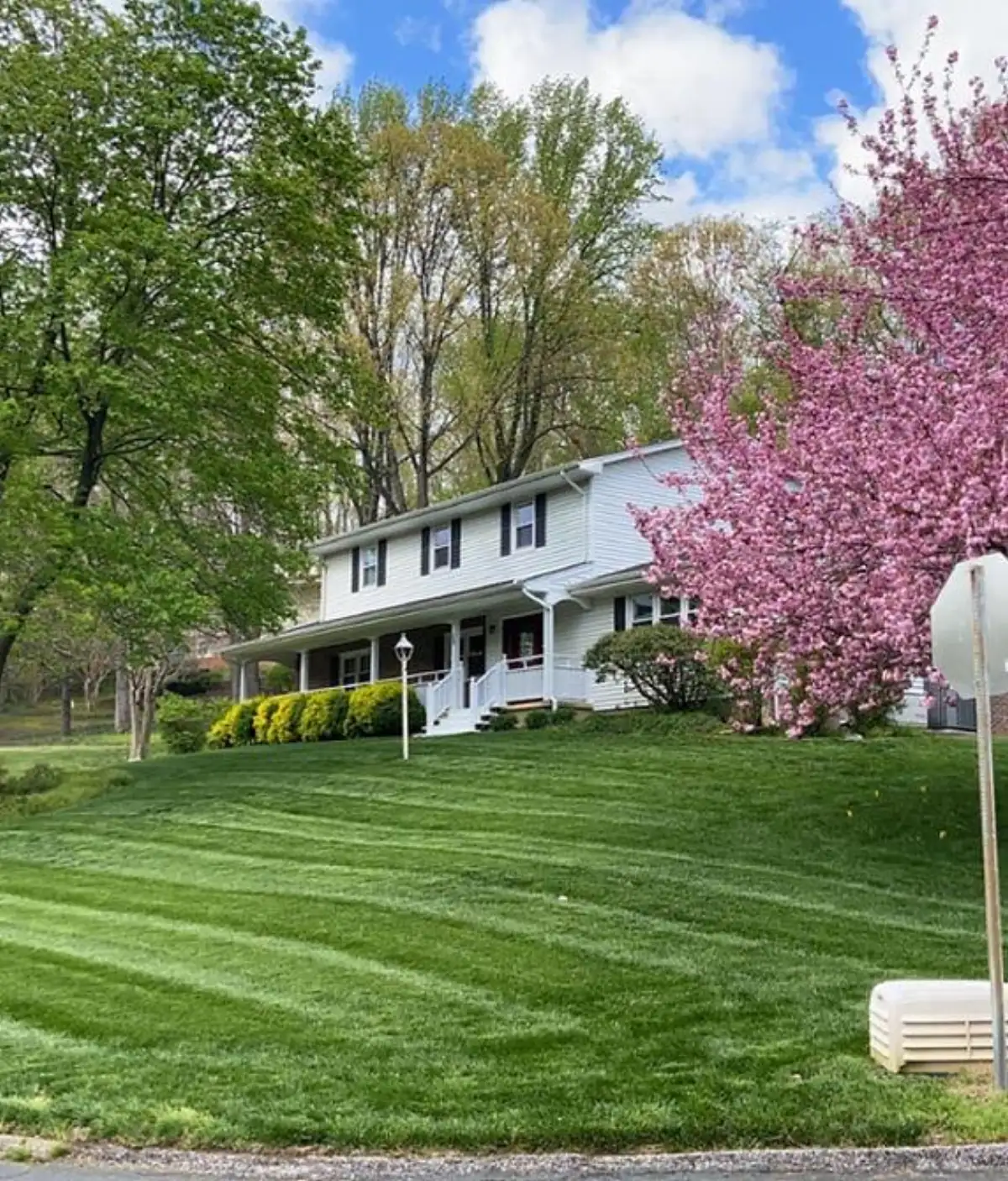
Summer lawn care in Annapolis and Anne Arundel County is less about forcing constant green growth and more about avoiding preventable stress. Hot, dry weather can slow cool-season grasses, while heavy rain can leave other sections of the same yard too wet to mow. A schedule based on actual growth and soil moisture is more useful than treating every week the same.
This guide gives homeowners in Annapolis, Cape St. Claire and nearby communities a clear June-through-September plan. It also explains when routine lawn maintenance is enough and when thin or compacted turf may need a fall recovery plan.
Ask about weekly mowing, edging, trimming and cleanup for your Anne Arundel County home.
June: Raise the Mower and Watch Soil Moisture
June often begins with active growth and ends with summer stress. Keep checking the lawn before each cut: the grass should be growing, the surface should be firm enough for equipment, and the cut should not remove too much of the blade at once.
Use the one-third rule
For tall fescue, University of Maryland Extension recommends a summer mowing height of 3 to 4 inches. Remove no more than one-third of the blade in a single cut. If rain causes a growth spurt, it may take more than one mowing to return the lawn to its normal height without scalping it.
Keep mower blades sharp and change the route across the lawn when practical. A clean cut is easier on the grass, while repeated turns in the same damp or narrow areas can leave wear and ruts.
Water only when the lawn needs it
A fixed watering schedule can be a poor fit for Maryland weather. Established cool-season lawns can slow down or go dormant during hot, dry periods. If you choose to irrigate, water in the morning and apply it slowly enough to soak in rather than run toward sidewalks, driveways or storm drains.
Check different parts of your yard rather than assuming they dry at the same rate. In Cape St. Claire, open sunny areas, shaded backyards, slopes and low sections can respond differently after the same storm.
Address weeds without adding more stress
Thin turf gives weeds room to establish, but summer is not the time to push a stressed cool-season lawn with an aggressive catch-up routine. Pull isolated weeds when practical, avoid letting them set seed, and make note of recurring problem areas. Those notes will help you decide whether the underlying issue is mowing height, compaction, shade, drainage or bare soil that should be addressed in fall.
July: Protect Grass During Heat and Dormancy
Brown turf in July is not automatically dead turf. Tall fescue and Kentucky bluegrass can go dormant during summer drought and often green up when cooler weather and rain return. The goal is to avoid damaging crowns and compacting dry or saturated soil while growth has slowed.
Let growth determine the mowing interval
Keep tall fescue toward the upper end of its recommended height during hot, dry weather. If the grass has stopped growing, pause mowing. If rain restarts growth, wait until the turf has rehydrated and the ground is firm enough to support equipment without rutting.
Choose a clear watering approach
An established lawn may be allowed to go dormant, or it can be watered as conditions require. Whichever approach you take, avoid brief daily sprinkling that wets leaves without addressing dry soil. Newly seeded areas and first-year lawns have different needs from established turf and should be managed separately.
Look for patterns before choosing a remedy
Heat stress, drought, prolonged leaf wetness, pet traffic and soil compaction can all create discolored patches. Before applying a product, compare the affected area with its sun, shade and moisture conditions. A recurring patch deserves a diagnosis; adding fertilizer or water without identifying the cause can make the problem harder to read.
August: Plan Fall Lawn Recovery
Use August to separate temporary summer dormancy from areas that are persistently thin, compacted or bare. Walk the lawn after rain and note standing water, hard soil, heavy shade and routes that receive frequent foot traffic.
Plan Your Fall Aeration and Overseeding
If compaction and thin turf are part of the problem, ask whether core aeration and lawn overseeding fit the site. Aeration can help water move into compacted soil and create openings for seed-to-soil contact, but the estimate should account for access, shade, the size of the thin areas and how new seed will be watered.
University of Maryland Extension places the main cool-season lawn renovation and overseeding window from mid-August through mid-October. Schofield Outdoors is accepting fall aeration and overseeding estimate requests for Annapolis, Cape St. Claire and the surrounding service area without promising a specific service date before the property is reviewed.
Soil Testing
A soil test can clarify pH and nutrient questions before fertilizer or lime is applied. It is more useful than guessing from color alone, especially when different sections of the lawn behave differently. Keep the results with your lawn notes so future decisions are based on the same baseline.
Map repair areas before work begins
Mark irrigation heads, shallow utilities, invisible dog fencing and other obstacles before aeration. Identify the sections where seed is most needed and decide how you will keep new seed consistently moist. Those details make the estimate more useful and the fall plan easier to follow.
September: Shift From Protection to Recovery
As cooler conditions return, actively growing cool-season lawns can recover from summer stress. Continue to follow the one-third rule, resume mowing only as growth requires, and keep leaves from matting over new seedlings.
Core Aeration and Overseeding
After overseeding, follow the watering guidance for the seed and the actual site instead of using the established-lawn routine. Keep foot traffic off soft seedbeds, and coordinate the first mowing with seedling growth and ground conditions.
Fall Fertilization
Cool-season lawn fertilization is generally better timed for late summer into fall than midsummer, but the product, rate and need depend on the grass and soil conditions. Follow Maryland requirements and the product label, and use soil-test results when nutrient or pH questions are part of the problem.
Return to a growth-based mowing rhythm
Weekly lawn maintenance can be useful when growth is steady, but weather still matters. Saturated sections may need more time, and new seedlings should not be treated like established turf. A consistent service route should still adjust to what the yard can safely handle that day.
Cape St. Claire Lawn Care Needs a Yard-by-Yard Check
Cape St. Claire yards can combine open sun, mature shade, slopes, narrow gates and low areas that stay soft after rain. The same cut or watering decision will not be right for every section. Start with mowing height, current growth and moisture, then note where the lawn remains thin after summer. For broader neighborhood context and service options, visit the Cape St. Claire lawn care page.
When Professional Lawn Maintenance Makes Sense
If the hardest part is keeping up with mowing and the finishing work around your home, Schofield Outdoors offers recurring lawn maintenance that includes mowing, edging, string trimming and blowing clippings from hard surfaces. Larger recovery needs such as aeration and seeding can be discussed separately so the requested scope stays clear.
Call (410) 656-3182 or request a lawn care estimate. Service is available across Annapolis, Severna Park, Arnold, Cape St. Claire, Millersville, Pasadena, and Crownsville.
Summer Lawn Care Questions
Remove no more than one-third of the grass blade in one mowing. If the lawn grows tall after rain, bring it back to the target height over more than one cut instead of scalping it.
Not necessarily. Established cool-season grass can go dormant during hot, dry weather and often greens up again when cooler conditions and rainfall return. Newly seeded or struggling lawns need a different watering plan.
Water according to the grass, soil and recent weather rather than a fixed daily schedule. If irrigation is needed, water in the morning and slowly enough to soak in without running onto hard surfaces.
For cool-season lawns, University of Maryland Extension identifies mid-August through mid-October as the main renovation and overseeding period. Start planning in August so access, thin areas and watering can be considered before work begins.
Recurring lawn maintenance includes mowing, edging, string trimming and blowing clippings from driveways, walkways and patios. Aeration, seeding and other seasonal work can be discussed as separate services.
Maryland Lawn Care Sources
This schedule follows current homeowner guidance from University of Maryland Extension. See its Lawn Maintenance Calendar, Maintaining an Established Lawn, and water-conservation guidance.